

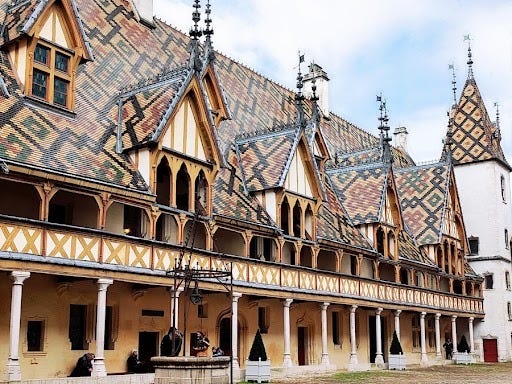
Every visitor to Beaune photographs the same roof. Those glazed tiles on the Hôtel-Dieu, geometric and impossibly green and gold, are the postcard the whole town runs on. Stand under them long enough and you will hear a guide explain that Nicolas Rolin, chancellor to the Duke of Bourgogne (Burgundy), built this place in 1443 as a palace for the poor.
What you will hear less often is the name of the woman standing next to him.
The other founder
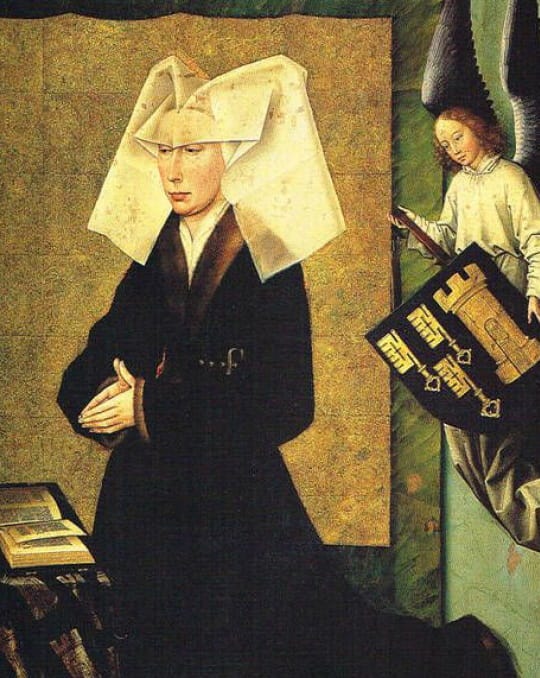
Guigone de Salins was born into a Jura family in 1403 and married at eighteen to a man of forty-seven who had already buried two wives. That is the sort of detail history usually leaves as decoration. In her case it turned into a career. She and Rolin founded the Hôtel-Dieu together, and when he died in 1462 she did something that the women of her class were not especially encouraged to do. She moved to Beaune, took the habit of the order attached to the hospital, and ran the institution herself for the last eight years of her life. She spent her own fortune on it, and gave it her vineyards. She was buried in its chapel, where she still is.
Today, if you follow the November auction, you will see a Beaune Premier Cru called Cuvée Guigone de Salins come up for sale, built largely from the steep slope of Les Bressandes. Her name has been circulating through the global fine wine trade for the better part of six centuries. Ask most people in that trade who she was and you will get a pause, and then something about Rolin’s wife.
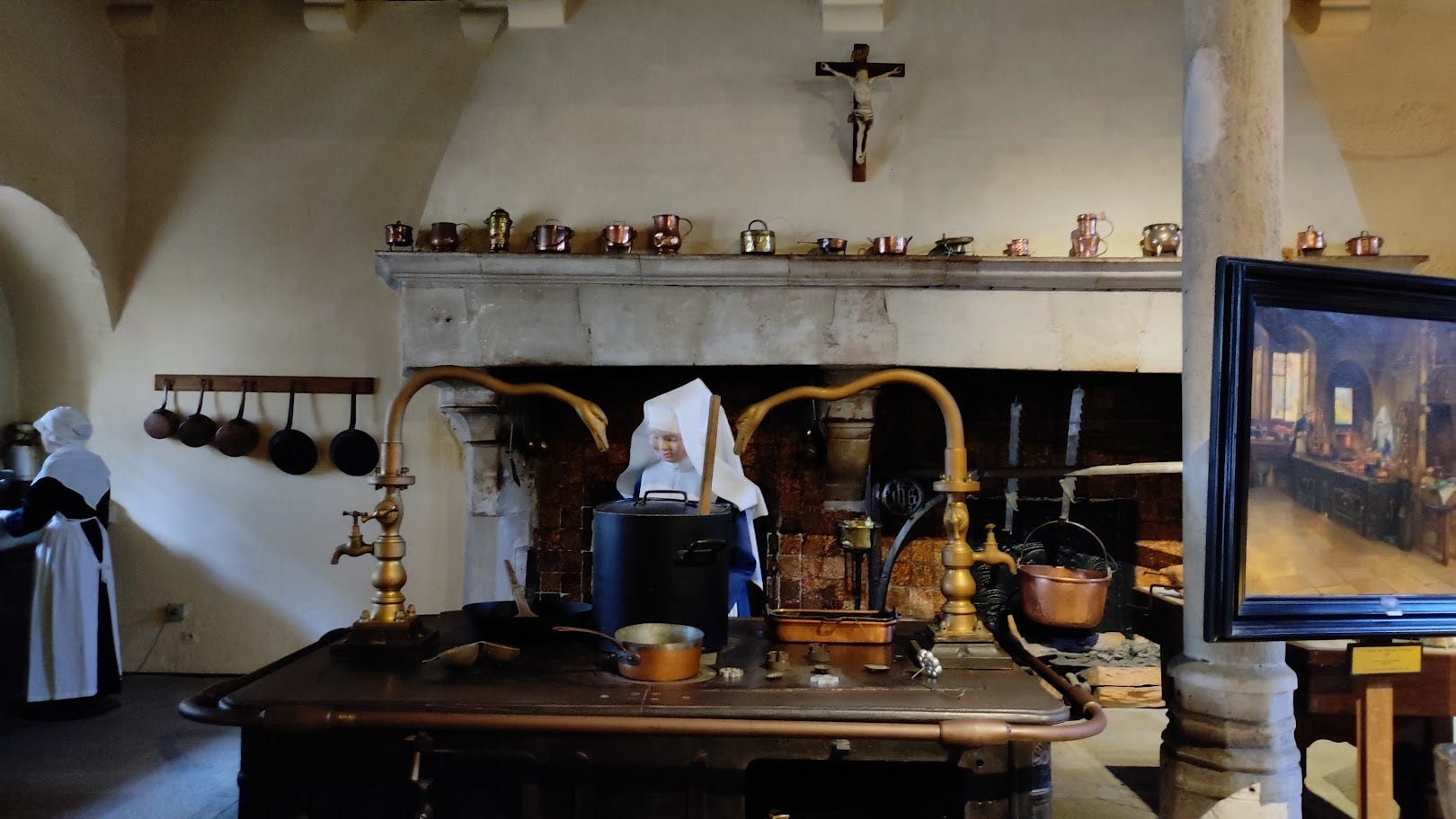
There is a second set of women in that building too, and they are even quieter. When Rolin established the Hôtel-Dieu he also founded a religious order to staff it, the sœurs hospitalières de Beaune. Those women ran the wards, nursed the poor of the town, and kept the institution alive through plague, revolution and war until the hospital function finally moved out in the 1970s. Five centuries of continuous work by women, inside the most photographed building in the region, and no cuvée is named for any of them.
The next one arrived in 2015
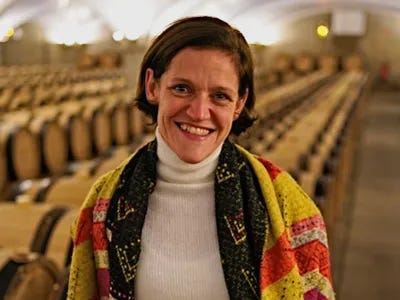
Ludivine Griveau was appointed régisseuse of the Domaine des Hospices de Beaune in 2015, and she was the first woman ever to hold the job. Between Guigone de Salins and Ludivine Griveau there are five hundred and seventy-two years.
Griveau is refreshingly unwilling to romanticise the connection. When asked about Guigone she made a point of correcting the easy version of the story: her predecessor cared for the sick, and the wine was not hers to run. I love that she said it. The temptation with a piece like this is to inflate every woman you find into a secret genius, and Griveau declined the invitation on Guigone’s behalf.
Her own remit is enormous. She oversees around sixty hectares spread from Chablis to Pouilly-Fuissé, more than a hundred plots, and a team of twenty-three winegrowers, and she took the estate into organic certification from the 2024 vintage. Every cuvée that draws those extraordinary prices in November is shaped by her. If the Hospices is a flagship of Bourgogne (Burgundy), and it is, then a woman is currently sailing it.
What the archive shows, if you look for women
Convents across medieval Europe held and farmed their own vineyards, and the number of nunneries grew roughly tenfold between the years 1000 and 1300. Women appear as donors in the same charters and deeds that historians now use to date and map the vines. They pruned, they harvested, they carried and sorted, and their names went unrecorded because nobody in a position to write things down thought a vineyard worker’s name was worth the ink.
Which brings me to the monks. They are the face of Bourgogne (Burgundy) for a set of reasons that have very little to do with merit and a great deal to do with paperwork and marketing.
The paperwork first. Literate male orders generated charters, leases and account books, and they built institutions that outlasted individual lives, so their version of events survived in writing. Women’s labour left almost nothing on paper.
Then the marketing. The image most people carry, the monk in the black and white habit swirling a glass in candlelight, largely comes from postcards printed in the late 1800s, and Marion Foucher, who studies the archaeology of these vineyards from ARTéHis in Dijon, has described much of the tasting-monk narrative as a construct of the twentieth century. When a region needs to explain itself to the world, a single pious man in a robe is far easier to print than a crowd of nuns, widows, hired labourers, merchants and aristocratic women arguing across six hundred years. All about marketing isn’t it?
Don’t we all love the genre of women in male dominated field
Cécile Mathiaud of the Bourgogne wine board has put the problem plainly, noting that many domaines carry the name of men but are directed by women. Virginie Taupenot of Domaine Taupenot-Merme in Morey-Saint-Denis describes the older pattern from the inside: women worked the vines, organised the life of the estate and kept the accounts, and the recognition went to the husband whose name was on the sign.
The generational break came in the 1980s and 1990s, and it is worth naming the people who made it.
At Domaine Georges Mugneret-Gibourg in Vosne-Romanée, Georges Mugneret died suddenly in 1988. He had lined up a buyer, and he had told his daughters that winemaking was not a job for women. His widow, Jacqueline, refused the sale. Marie-Christine, a pharmacist with a young family, left her profession to learn the cellar. Marie-Andrée, barely twenty, finished her oenology diploma and joined her three years later. Marie-Andrée has said that when they arrived there were still cellars women were not allowed to enter. Thirty-five years on, Le Figaro Vin ranked the two sisters second among all the winemakers in France, and their Ruchottes-Chambertin and Clos de Vougeot are among the most quietly perfect wines in the Côte de Nuits.
Down in Puligny-Montrachet, Anne-Claude Leflaive took over Domaine Leflaive in 1994 and committed the whole estate to biodynamics by 1997, twenty-four hectares of Chardonnay including some of the greatest white wine terroirs on earth. Decanter named her the world’s best white winemaker in 2006. She died in 2015 at fifty-nine, having reset the standard for white Bourgogne (Burgundy) for a generation.
At Vosne-Romanée, Lalou Bize-Leroy had taken over the family négociant house in 1955 at twenty-three, became co-gérante of Domaine de la Romanée-Conti in 1974, founded Domaine Leroy in 1988 and put it entirely under biodynamic farming that September, one of the earliest conversions on that scale anywhere in the region. Her wines now sit at the top of the global market. Her daughter, Perrine Fenal, co-directs Domaine de la Romanée-Conti today.
And in Pommard, Anne Parent and her sister Catherine Fages-Parent took over Domaine Parent in 1998. The estate had been run by the men of the family since 1803.
Six women at a table
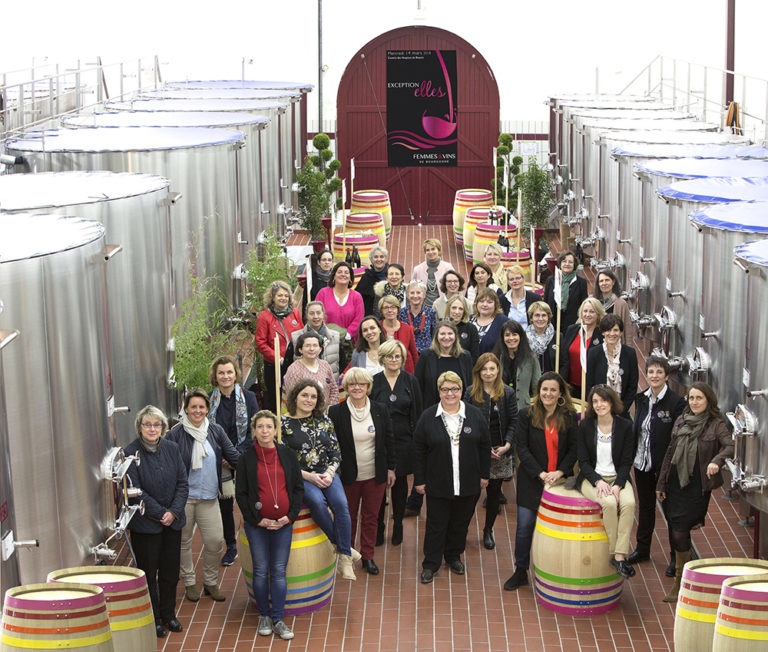
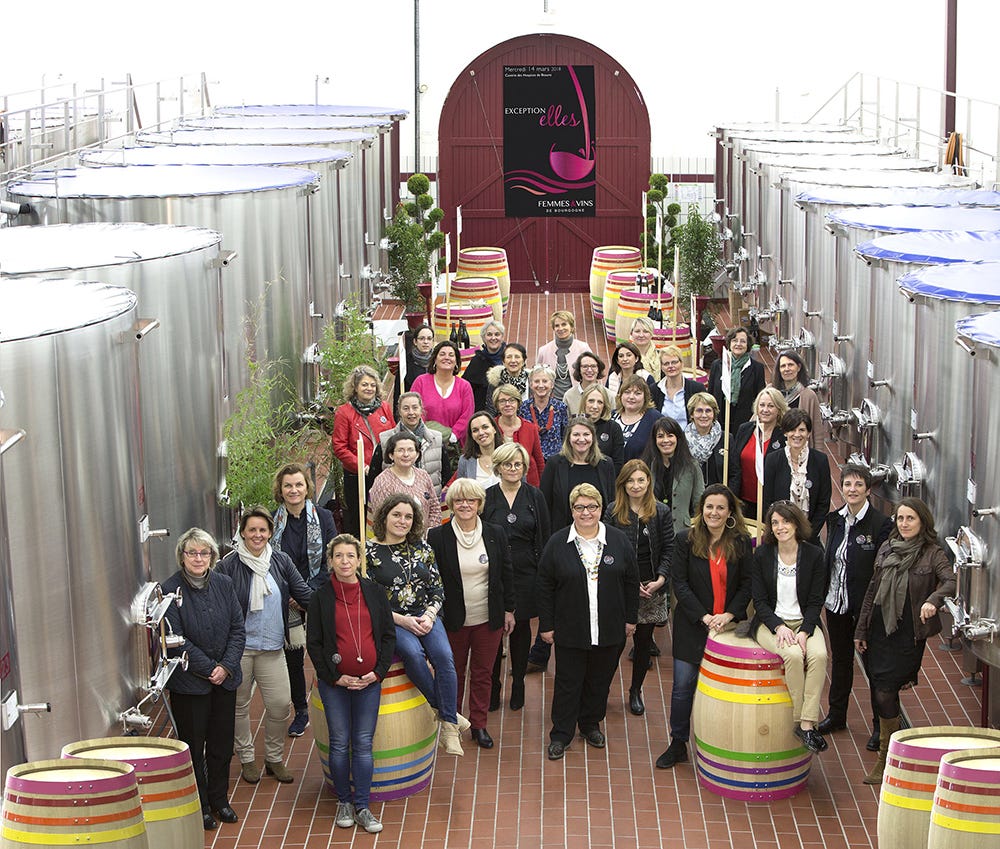
In 2000, Anne Parent ran into Virginie Taupenot at a wine fair and floated an idea. Along with Chantal Michel-Tortochot, Mireille Desmonet-Billard, Anne Schussler-Naudin and Véronique Desfontaine, they founded Femmes et Vins de Bourgogne. Six women who wanted somewhere to compare notes and talk about the parts of the job nobody else was discussing. They described the association as feminine rather than feminist, which tells you something about the caution required at the time. It now runs to around forty members from Chablis down to the Mâconnais, and sits inside a national network of roughly three hundred women across ten French wine regions.
The numbers have moved with them. As of 2025, around thirty-one percent of French wine producers are women, more than thirty percent of vineyard managers, and close to half of all oenology students.
Griveau, who would know, has suggested the sharpest remaining barrier is internal, the private suspicion of not being legitimate in a room you have every right to be in. Her answer is blunt and I think about it often: nobody has been cast in this by mistake.
What I actually want you to do with this
The list of women running serious Bourgogne (Burgundy) right now is long and getting longer. Anne Gros, Ghislaine Barthod, Claude de Nicolay at Chandon de Briailles, Cécile Tremblay, Amélie Berthaut at Berthaut-Gerbet, Nadine Gublin, The Mugneret sisters, Perrine Fenal, new rising winemakers like Mai Roblin and many more. Ludivine Griveau, shaping every barrel that crosses the auction floor in November.
None of this diminishes the monks. They cleared land, they built the clos, they kept viticultural knowledge alive through centuries that were not kind to knowledge, and they deserve their chapter. What they do not deserve is the entire book, especially a version of the chapter that was partly written for them in the 1800s by people selling postcards.
So the next time you are standing under that roof in Beaune and someone hands you the monks, ask who else was in the room. Then go and find a bottle from one of these women, pour it for somebody, and say her name out loud while you do it. That costs nothing, and it is the only part of this that any of us actually controls.
Sources
Sources: Hospices de Beaune (hospices-beaune.com); Decanter and Taste of France on Ludivine Griveau’s appointment; Bourgogne Aujourd’hui, “Elles ont ouvert la voie”; Palate Press on Femmes et Vins de Bourgogne; Femmes et Vins de Bourgogne (fevb.net); Le Figaro Vin, France’s Best Winemakers 2023; Jancis Robinson on the Mugneret family; Wine Spectator and Oenosuite on Lalou Bize-Leroy, Anne-Claude Leflaive and Perrine Fenal; Marion Foucher, ARTéHis, Dijon; Bruce Venarde, Women’s Monasticism and Medieval Society.


Leave a Reply