

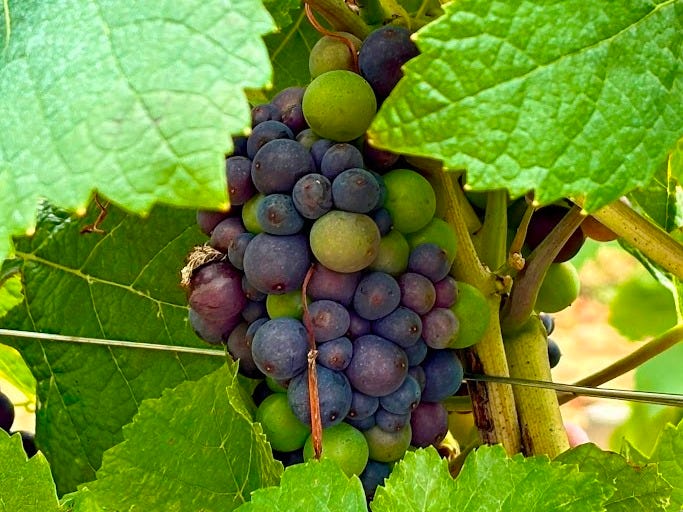
There is a conversation I have every single August, and I suspect I will have it until I die. I mention that the harvest feels early this year, and usually someone lovely, usually someone who has been around vines far longer than I have, tells me that early harvests are nothing new. They say, the vines have seen it all before.
They are not entirely wrong, which is the annoying part. The vines have seen a great deal. What I have learned, though, is that memory is a terrible instrument for this particular argument, because a human memory holds maybe seventy or eighty harvests, and it holds the dramatic ones most brightly of all. If you want to actually know whether this year is unusual, you ask a ledger and I learnt that in Beaune, there happens to be one of the best ledgers in the world.
The date that broke the record
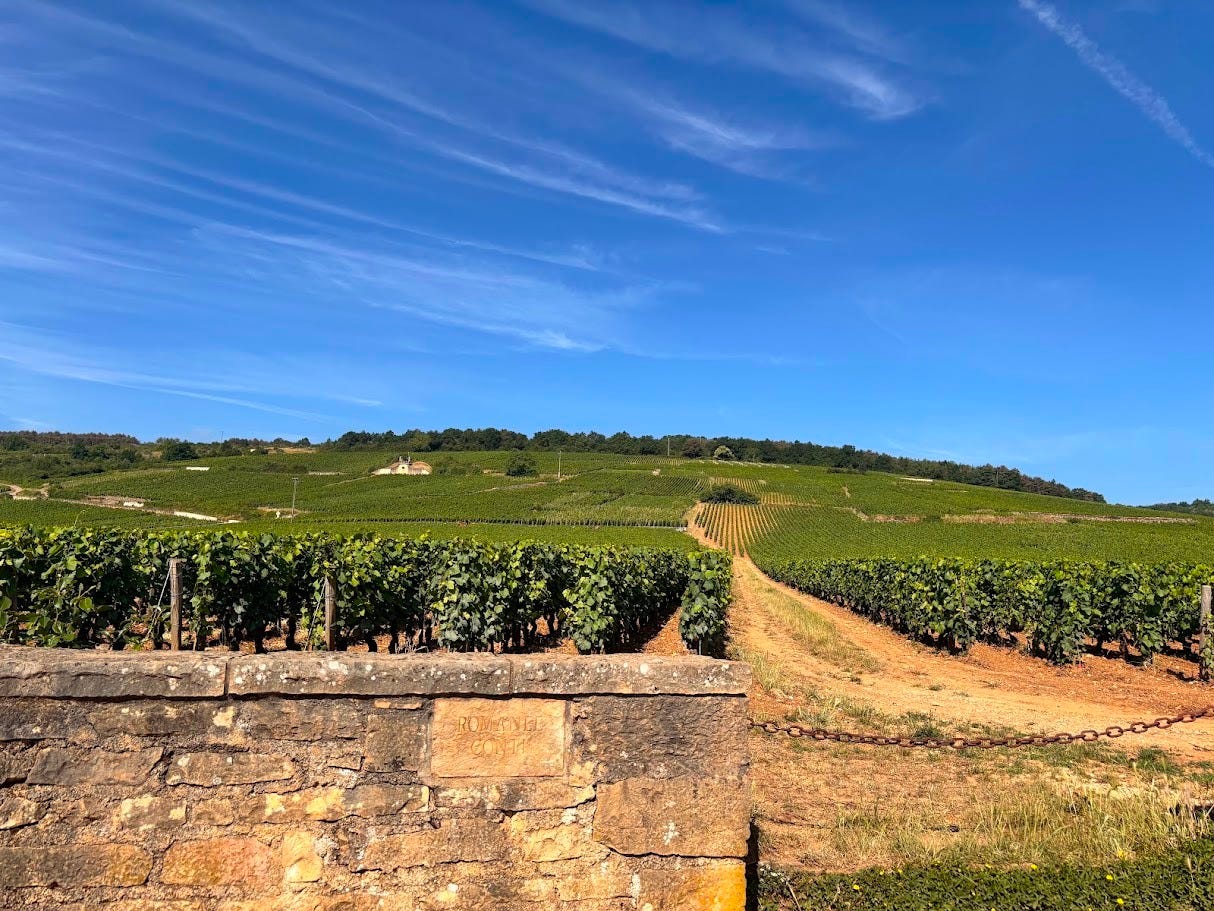
The first grapes of the 2026 vintage in Bourgogne (Burgundy), harvested for crémant, were cut on Saturday 8 August. That is the earliest start ever recorded here. The previous record was 13 August, set in 2022, and before that people talked about 2020 as the extraordinary one. Marc Sangoy, who runs the Cave de Lugny and its 1,250 hectares in the Mâconnais, told AFP that in nearly forty years as a vigneron he had never seen a harvest begin this early, and that the records are now falling faster than anyone thought possible. The still wines, the whites and the reds we actually think of as Bourgogne (Burgundy), are being harvested as we speak.
If you have only ever known wine through the romance of it, an August harvest might not land as strange. So let me tell you why, for anyone who has spent time in these vineyards, it lands as very strange indeed.
Why Beaune, of all places, can settle this
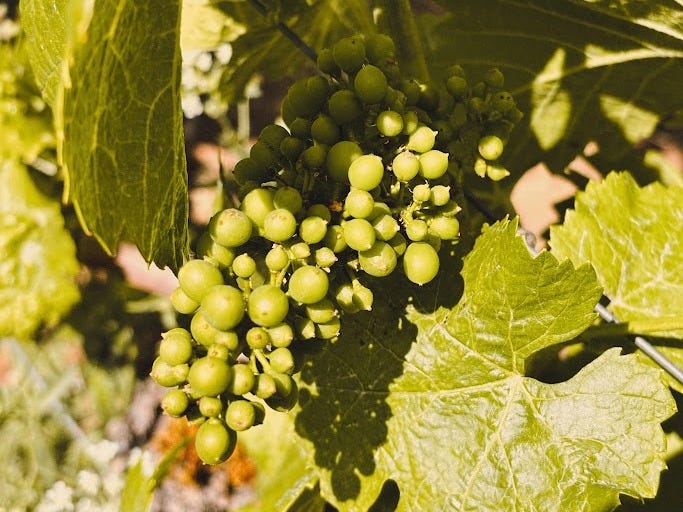
Nobody in medieval Beaune was documenting the climate, as I assume they could not have cared less about the climate as an abstraction. What they cared about was money, specifically the wages they had to pay the people who picked the grapes. So every year, the town recorded when the harvest opened, because that was when the money started moving.
Those records went into the city council archives and sat there for centuries. And in 2019, a team of researchers led by Thomas Labbé published a study in the journal Climate of the Past that did something remarkable with them. Rather than lazily copying figures out of old published books, which is exactly how the well known Dijon harvest series became so full of errors, they went back into the unedited Beaune archives themselves. They read the originals, they cross-checked every date against written accounts from the time, and from that they reconstructed the harvest start date for every single year from 1354 to 2018.
That is 664 unbroken years. It is the longest grape harvest date series in the world, and one of the longest records of any natural seasonal event that humanity possesses. It exists because a small Burgundian town was diligent about payroll for six hundred years heheh!
How we know the ledger is telling the truth
A list of harvest dates is only useful as a record of the climate if those dates genuinely track temperature. A vigneron might pick early for all sorts of reasons that have nothing to do with the weather. So the researchers tested the Beaune series against everything they could find. It correlates at 0.76 with the mean March to September temperatures in the long Paris instrumental record, across the 360 years from 1659 to 2018. It lines up with tree ring data. It agrees with other documentary evidence. It matches the Central European temperature series going all the way back to 1500.
Four independent lines of evidence, from thermometers to tree rings, all pointing the same way. When something is corroborated that thoroughly, you stop being able to dismiss it as a story.
Six centuries of almost nothing, and then everything at once
For most of those 664 years, it says the harvest barely moved. Through the plague, through the French Revolution, through phylloxera tearing the heart out of European vineyards, through two world wars, the numbers stay remarkably steady. The researchers found nearly identical averages across every sub-period before 1988. From 1354 right through to 1987, more than six centuries, the grapes in Beaune were picked on average from 28 September onward.
Across the rapid warming period from 1988 to 2018, that average start jumped forward by thirteen full days. Even the researchers said they had not expected the shift since the mid 1980s to announce itself so sharply in the data. Six centuries of stability, and then a lurch, all within one human lifetime.
The extremes tell the story even more bluntly than the averages do. Of the 33 earliest harvests in the entire 664 year record, twenty-one of them happened between 1393 and 1719. Only five fall across the whole long stretch from 1720 to 2002, and then another five of them sit inside just the final eight years of the series. The exceptionally hot, dry, early years that used to arrive once every few generations are now stacking up almost back to back. The authors put it in one sentence that I think about constantly: what used to be an outlier has become the norm since 1988.
What the grapes themselves are saying
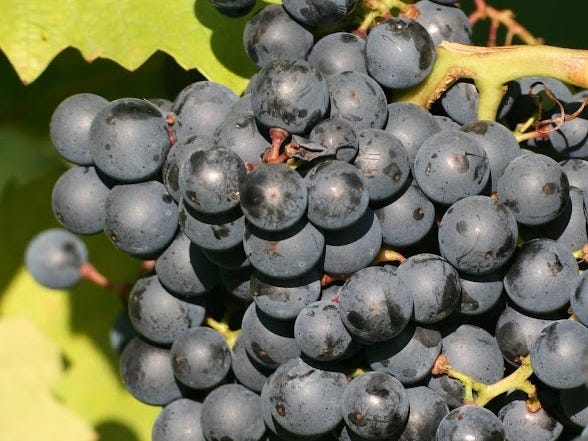
The growers who are already picking are describing something genuinely lovely, even with everything the drought has thrown at them. Jean-Yves Bizot in Vosne-Romanée told the press that the fruit is holding up, that maturity is moving fast, and that 2026 will be a vintage with real acidity. That freshness is the silver lining of picking before the worst of the late summer heat can burn it away. The problem is quantity. The berries barely swelled under the repeated heatwaves, and growers across the region are already bracing for reduced yields. Bizot’s own summary was blunt and I love him for it: a vintage with acidity, just do not dream of a lot of juice.
That is roughly what I am hearing from the domaines I work with, too. The grapes are beautiful even if there are not many of them. Small, aromatic, holding their acidity in a way that makes you forgive the modest volume. It is the kind of vintage that rewards the grower who reads their parcels carefully.
This week, there is rain forecasted, I am still waiting for the rain while I type this. After a summer of drought, storms and showers are forecast across Beaune and the wider region from around 17 August onward, several days of it. This is why the vineyard is split in two right now. Some growers are already in the rows, racing to bring in fruit at the acidity they want. Others are standing still today, watching the sky, deciding whether a little water will plump the berries and lift the volumes or whether it will simply arrive too late to matter. Both are reasonable bets, nobody knows yet which will look wiser in October.
Why I am writing this down
I could leave this as a piece about a broken record and a nervous week of weather, and it would be true. But the reason I keep returning to that 664 year series is that it does something to my sense of scale, and I think it might do the same for you.
We are a generation that tends to experience the climate as weather, as a bad summer here, a strange spring there, easily absorbed and easily forgotten. The Beaune archive hands me six centuries of ordinary people writing down an ordinary date for an ordinary reason, and in doing so it shows me exactly how extraordinary this moment is. The people who kept those ledgers had no idea they were building a climate record, and now their bookkeeping is one of the clearest pieces of evidence we have that something has genuinely changed under our feet, or rather, under our vines.


Leave a Reply