

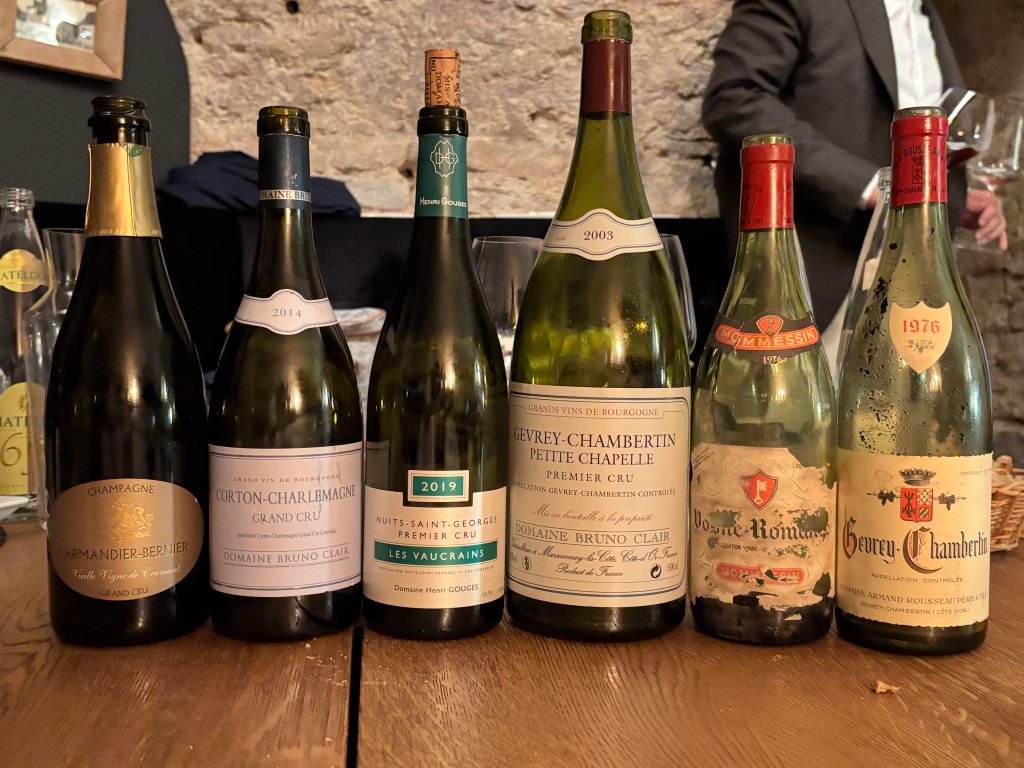
There is a particular sound a room makes when a woman walks into a fine wine tasting and someone assumes she is the plus one. Hostility would be easier to name. I have been in that room in Beaune, in Delhi, in Paris where I was judged as someone’s plus one but well jokes on them. I have also been the woman on the judging panel scoring the wine that the man across the table is explaining to me. Both things are true at once, and the gap between them is the actual subject of this article.
So: is the fine wine club a boys’ locker room? The honest answer is that it depends entirely on which room you are standing in, and that the rooms are not equally distributed.
The pipeline is not the problem
Every time this conversation happens, someone reaches for the pipeline defence. Give it time, they say. The women are coming, well they have been here for a long time now.
In France, women now make up around 31% of wine producers, and 47% of students in oenology programmes. That second number is the one that matters, because nearly half of the people currently learning to make wine in this country are women. In Bourgogne (Burgundy) specifically, the shift is visible enough to be almost banal now, though it is worth remembering how recent it is. Chantal Michel Tortochot, co-founder of Femmes et Vins de Bourgogne, has recalled that as late as 1990 she was one of only three female winemakers among eighty in Gevrey-Chambertin. Three. In a single appellation, within one working lifetime.
The association she helped found in 2000 now gathers around forty members across roughly thirty estates. Domaine Parent, in Pommard, passed to Anne and Catherine Parent in 1998, the twelfth generation and the first women to run it, and only because their brother stepped away. That last clause is the whole story compressed into a subordinate phrase. In the most tradition-bound wine region on earth, the daughters were the contingency plan.
Meanwhile in the United States, roughly 82% of winemakers are men, while 59% of wine purchases are made by women. An industry in which the majority of the buying is done by women and the overwhelming majority of the making is done by men is not suffering a supply problem. It is running a distribution problem, and the thing being distributed is authority.
The credentials tell on themselves
The two great institutions of the wine world are the Institute of Masters of Wine and the Court of Master Sommeliers. They are not equivalent, and the difference between them is instructive.
The MW is an examination. There are now 427 active Masters of Wine across 31 countries, and roughly a third of them are women. Sarah Morphew Stephen became the first female MW in 1970. By 1979, equal numbers of women and men were passing. By 1986, more women than men passed. Over the last decade the split among new MWs has sat at roughly 55% male to 44% female. Not parity, but a recognisable trajectory.
The Master Sommelier is a service qualification, awarded largely through apprenticeship, mentorship, proximity, and the good opinion of people already inside. The Court of Master Sommeliers, Americas, has awarded 170 diplomas since its inception. Of those, 145 went to men and 25 went to women. Around 15%, in a profession where the floor staff has been substantially female for decades.
The difference between one-third and one-seventh is not a difference in talent but difference in mechanism.
In October 2020, the New York Times published exactly why. Twenty-one women told the paper they had been sexually harassed, manipulated, or assaulted by male Master Sommeliers. Some of the men accused held instructional and senior roles. The organisation commissioned an outside investigation, the chairman stepped down, the board committed to an overhaul, and six men were ultimately stripped of their titles. Several of the women involved had abandoned the certification path entirely, which is to say the harassment worked, in the narrow and horrible sense that it removed them from the competition.
The room where the money is
Fine wine collecting, the world of allocations and en primeur and cellar provenance, is the most male space in the entire category by a distance that borders on the comic. In 2022, roughly 10% of Christie’s wine bidders were female, up from 8% in 2018. Regionally the picture splits: about 6% in the Americas and Europe, about 18% in Asia-Pacific. Serena Sutcliffe MW, who led Sotheby’s wine department until 2015, has described private collecting as effectively 99% male when she started and largely unchanged since, and has noted that many collectors’ groups, particularly in the US and Asia, are men only. Not male-dominated, Men only!
The Asia-Pacific figure is the tell. If female participation in fine wine collecting were about some innate feminine disinterest in acquisition, as the tediously recurring pop-psychology explanation has it, that number would not be three times the Western one. What differs in Hong Kong and Singapore is not women’s brains. It is the recency of the wealth and the absence of a two-century-old social ritual attached to it. Where wine arrived as a luxury good rather than as an inherited masculine rite, women simply bought it.
Recent analysis of the under-forty wine investment market found that women under 25 enter wine education at rates close to parity with men, then fall away sharply through their thirties, with only around a quarter going on to become regular buyers. That is a market of well over a hundred billion dollars, systematically failing to retain the people who showed up for the class.
I would add something the reports tend not to say. The exit in your thirties is the decade of the unpaid second shift, of caring labour, of the industry’s own working hours, and of a survey finding, in the UK, that 78% of women in wine consider sexism and gender bias a serious issue, 76% say women are underrepresented in leadership, more than one in three have faced harassment at work, and 44% have considered leaving the trade because of it. Only 9% work at a company with mostly or entirely female senior leadership. Women do not drift out of fine wine suddenly.
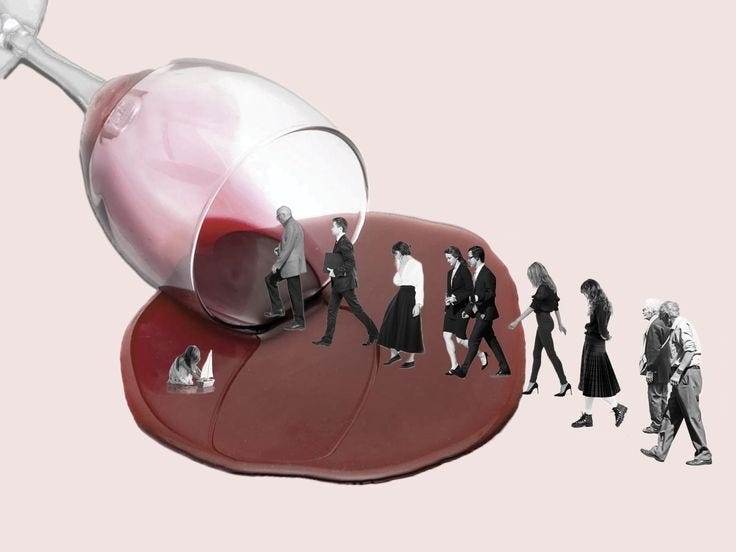
The taste itself is not neutral
Pierre Bourdieu’s argument about taste is that it is never innocent. Preference operates as a sorting mechanism, converting arbitrary aesthetic choices into evidence of natural superiority, and thereby laundering social hierarchy into personal merit. Wine is possibly the purest working example anyone has ever built. The vocabulary of fine wine, structure, backbone, muscle, austerity, seriousness, masculine power, is a value system wearing a lab coat.
A study published in the Journal of Wine Economics analysed over eighteen thousand wines reviewed by Wine Enthusiast between 1997 and 2016 and found that grape varieties with phonetically masculine names received higher ratings than those with feminine-sounding ones. The grapes did not know their own names, the critics did and guess what?
Krishnendu Ray’s work on the hierarchy of global cuisines makes the parallel move for geography: the price a cuisine can command is bound up with the status of the people associated with it, not the labour or skill involved. Fine wine runs both hierarchies at once, gender and geography, which is why a woman from Nashik discussing structure gets read as charming, and a man from Nuits-Saint-Georges discussing the same gets read as authoritative.
I say this as someone with WSET Level 3 with Distinction, a French Wine Scholar certification, a master’s degree, a judging seat at the Concours des Grands Vins de France à Mâcon, and an Indian passport. The credentials do a lot of work, but they do not do all of it. I have watched a room decide I was the interpreter rather than the expert, and I have watched the same room correct itself with visible effort once the qualifications were read aloud. That effort is the cost of admission that nobody bills to the men.
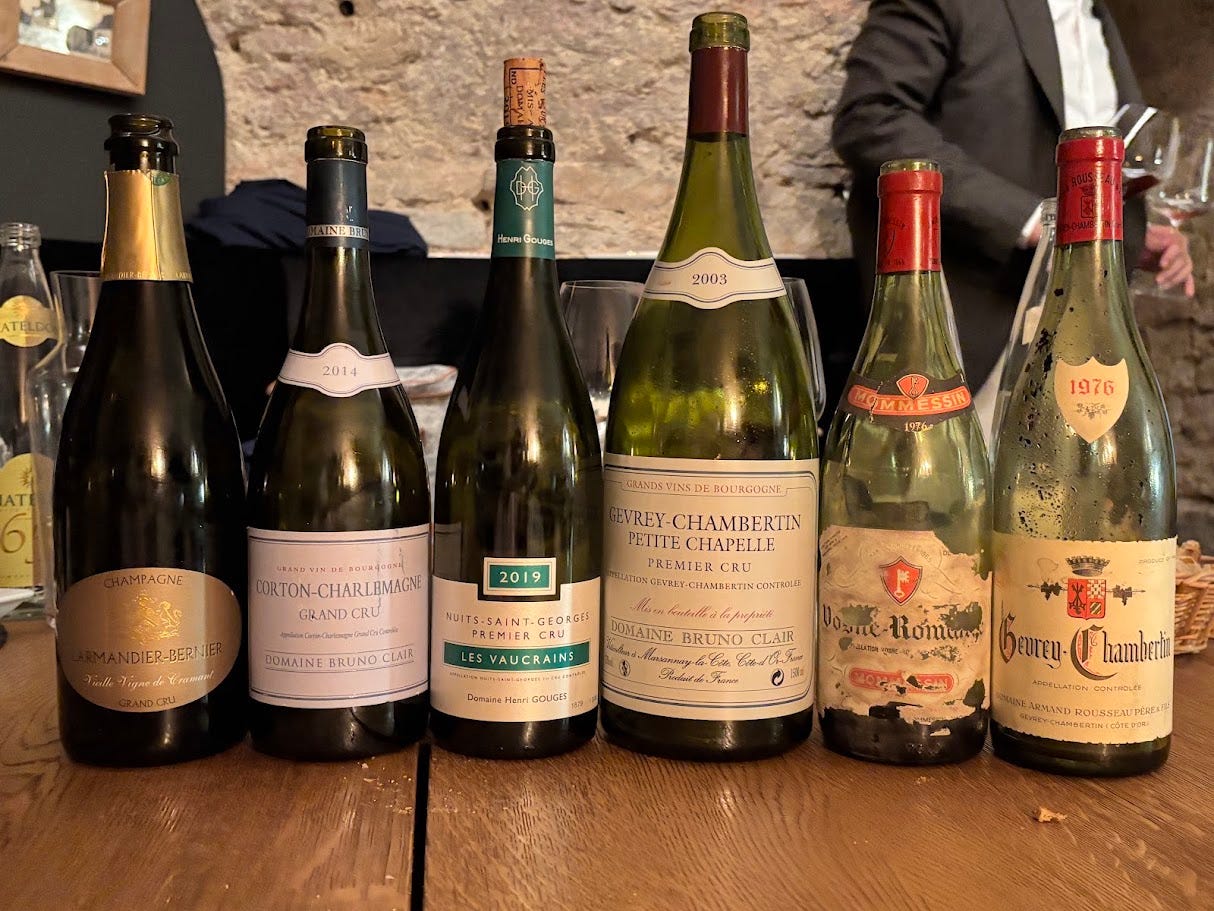
The people actually changing it
The gatekeeping described above depended on scarcity of access to information. You needed a mentor to learn to taste. You needed an invitation to try the benchmark bottles. You needed a job on a floor run by someone who would either sponsor you or proposition you, and sometimes those were the same person.
That monopoly is broken, and a significant amount of the breaking has been done by women building audiences directly, without asking a single institution for permission.
You can watch it happening. Two of my favourite women Fine wine creators on Instagram, Hannah brings a strategy consulting background to the terms this trade keeps conveniently vague, terroir and minerality and what “exceptional” actually means, and Mackenzie L Casey has built her audience around four words in her bio: be the one they hand the wine list to. Neither is asking the Court, the Institute, or a Wine Spectator masthead for validation.
That is the structural shift, and it is bigger than any individual account. Authority in wine used to be granted downward, by committee, to people who had spent years making themselves agreeable to the committee. It is now increasingly built outward, in public, by anyone with something worth saying. Audiences turn out to be considerably less sexist than committees.
I am not going to pretend the creator economy is a utopia. It has its own brutal hierarchies, it rewards attractiveness in ways that fall hardest on women, and a follower count is not a pension, but compare it honestly to the alternative it is displacing: a system in which advancement depended on the personal goodwill of a small number of powerful men, some of whom, it turned out, were charging for it.
The honest conclusion
Is the fine wine club a boys’ locker room?
The clubhouse and the auction room absolutely is, with a female bidder share in the single digits across Europe and the Americas and a collecting culture that has needed roughly forty years to move a couple of percentage points. The mentorship track has been, and in places remains, dangerous.
But the wine world is no longer only that room, and this is the part the old guard has not fully priced in. The cellar, the classroom, and the feed have all moved. Nearly half the oenology students in France are women. A third of Masters of Wine are women. The people teaching an entire generation how to taste, how to buy, and how to hold a list without flinching are, overwhelmingly, women with a phone and a point of view.
The locker room is still standing. It is just no longer where the game is being played.
Sources
Credentials
- 427 active Masters of Wine across 31 countries (August 2026 intake). Institute of Masters of Wine press release, 20 August 2026. https://www.mastersofwine.org/news/the-institute-of-masters-of-wine-announces-seven-new-masters-of-wine/
- Roughly a third of MWs are women; first female MW Sarah Morphew Stephen in 1970; equal pass numbers first reached in 1979; more women than men passed in 1986; last decade’s new-MW split roughly 55% male / 44% female. IMW History and FAQ pages. https://www.mastersofwine.org/about-us/our-history and https://www.mastersofwine.org/about-us/faqs
- Court of Master Sommeliers Americas: 170 diplomas awarded, 145 men, 25 women. 279 Master Sommeliers worldwide since 1969. CMS Americas exam FAQ. https://www.mastersommeliers.org/certification/exams/exam-faqs/
The 2020 Court of Master Sommeliers scandal
- 21 women told the New York Times they were harassed, manipulated or assaulted by male Master Sommeliers (Julia Moskin, October 2020). Coverage and aftermath: Wine Spectator, 9 November 2020. https://www.winespectator.com/articles/court-of-master-sommeliers-chairman-steps-down-after-sexual-harassment-scandal
- Chairman stepped down, board overhaul, six men ultimately stripped of titles; Emily Wines elected board chair. Fortune, 22 April 2022. https://fortune.com/2022/04/22/wine-court-of-master-sommeliers-sexual-harassment-board-leadership-rebuilding
Production and education
- 82% of US winemakers are men; 59% of US wine purchases are made by women. Washington State University / Auburn University study, published in the International Journal of Hospitality Management, February 2026. https://news.wsu.edu/press-release/2026/02/25/women-more-likely-to-choose-wine-from-female-winemakers/
- 31% of French wine producers are women; 47% of oenology students are women (2025). Oenosuite. https://oenosuite.fr/en/blog/femmes-vigneronnes-bourgogne-figures-legendaires
- Femmes et Vins de Bourgogne founded 2000, around 40 members across roughly 30 estates. Chantal Michel Tortochot was one of only three female winemakers among 80 in Gevrey-Chambertin in 1990. burgundywine.com. https://www.burgundywine.com/blog/Wine-Women–The-Female-Winemakers-of-the-Burgundy-Wine-Region
- Anne and Catherine Parent took over Domaine Parent in 1998, twelfth generation, first women to run it, after their brother left winemaking. Forbes, 7 March 2019. https://www.forbes.com/sites/theworldwineguys/2019/03/07/meet-anne-parent-a-female-winemaker-running-a-200-year-old-family-business/
Collecting and investment
- 10% of Christie’s wine bidders were female in 2022, up from 8% in 2018. Around 6% in the Americas and Europe, 18% in Asia-Pacific. Decanter, 2023. https://www.decanter.com/wine/mind-the-gender-gap-509751/
- Serena Sutcliffe MW on the collecting world being effectively 99% male, and on men-only collectors’ groups in the US and Asia. Decanter. https://www.decanter.com/features/women-collectors-247126/ and the 2023 piece above.
- Women under 25 enter wine education at near parity with men, then drop off sharply in their thirties, with only around 25% becoming regular buyers. Market sized at over $100bn. WineCap, March 2026. https://winecap.com/editorial/news/wine-investment-2026-how-the-under-40s-are-reshaping-the-market
Working conditions
- 78% of women say sexism and gender bias is an issue in the UK wine industry; 76% say women are underrepresented in leadership; more than 1 in 3 have faced harassment at work; 44% have considered leaving the trade; only 9% work for a company with mostly or all female senior leaders. Curious Vines survey, 2023. https://www.hertelier.com/post/sexism-gender-bias-harassment-women-in-wine-industry
- Also referenced by Jancis Robinson: https://www.jancisrobinson.com/articles/inspirational-women-wine
Bias in evaluation
- Grape varieties with phonetically masculine names received higher critic ratings. Based on 18,609 wines reviewed by Wine Enthusiast, 1997 to 2016. Journal of Wine Economics, Cambridge Core. https://www.cambridge.org/core/journals/journal-of-wine-economics/article/sounds-too-feminine-blind-tastings-phonetic-gender-scores-and-the-impact-on-professional-critics/834819F582B67E83518D8BEB5D7F47F8
- Female critics score female winemakers higher, particularly for high-acid aromatic whites. British Food Journal, 2025. https://www.emerald.com/bfj/article-abstract/doi/10.1108/BFJ-07-2025-0853/1331980/
The creators
- Hannah, hannahswinediary. Background in strategy consulting and private equity, studied in Mannheim near Rheinhessen and the Pfalz, worked harvests there and at a winery in Tasmania, now returns repeatedly to Bourgogne (Burgundy). Publishes winemaker interviews, editorial portraits, and structured analyses of terroir, minerality, and what makes a wine exceptional. https://www.hannahswinediary.com and https://www.instagram.com/hannahswinediary
- Mackenzie L Casey, mackenzielcasey. 23K Instagram followers, tasting content plus full-length YouTube episodes. Instagram bio: be the one they hand the wine list to. https://www.instagram.com/mackenzielcasey


Leave a Reply