

In June 2026 the Recording Academy announced five new Grammy categories, and the one everybody noticed was Best Asian Pop Music Performance. The rules specify that it honours performances originating from or widely recognised within Asian markets, and, crucially, that a song must make meaningful use of one or more Asian languages to qualify. The framing was inclusion. The subtext, according to a great many fans and critics, was that after years of watching BTS collect nomination after nomination in the main pop categories and win precisely nothing, the Academy had decided to build them a smaller, safer room where a trophy could finally be handed over without anyone in the general field having to lose.
Then, days ago, all seven members of BTS posted the same message and declined to submit any music for consideration this year. Their line was that they want their music heard and loved for what it is, rather than divided by region or language.

And now for the detail that should be printed and framed on the wall of every awards, BTS’s two biggest recent singles are in English. Under the new rule, the category built, in part, to reward them will not accept the very songs that made them impossible to ignore. The Academy invented a box, labelled it Asia, and then discovered that its intended occupants had grown too large, too global, and too fluent in the dominant language to fit inside it. So BTS did the only dignified thing available. They declined the box.
I have spent my working life in rooms where this exact manoeuvre happens with a cheese course instead of a press release, so allow me to translate it out of pop music and into the two industries I actually live in, it is my favourite thing to do hehhe!!

Asia is a continent!!! It is not a genre, and it was never a flavour.
Let’s start with the sheer geographic vandalism of the thing. Asia is around 4.7 billion people. It contains Korean pop, Hindustani and Carnatic classical traditions with centuries of theory behind them, Mongolian throat singing, Thai luk thung, Vietnamese ca trù, and the entire universe of Bollywood playback, and those traditions share roughly as much musical DNA as a Meursault shares with a can of energy drink. To gather all of it under one trophy is a filing error committed on purpose, by people who could not be bothered to learn the difference and decided their laziness should become an official category.
We do this constantly with food, and we even have a beloved word for it. “Asian food” is a menu heading and a supermarket aisle that swallows Chinese, Japanese, Korean, Thai, Vietnamese, Indian, Indonesian and Filipino cooking whole, each one carrying its own regional depth and its own centuries of argument about the correct way to make a single dish, all crushed onto one shelf and priced to stay there. Then zoom into just one of those cuisines and the flattening gets its own little monument.
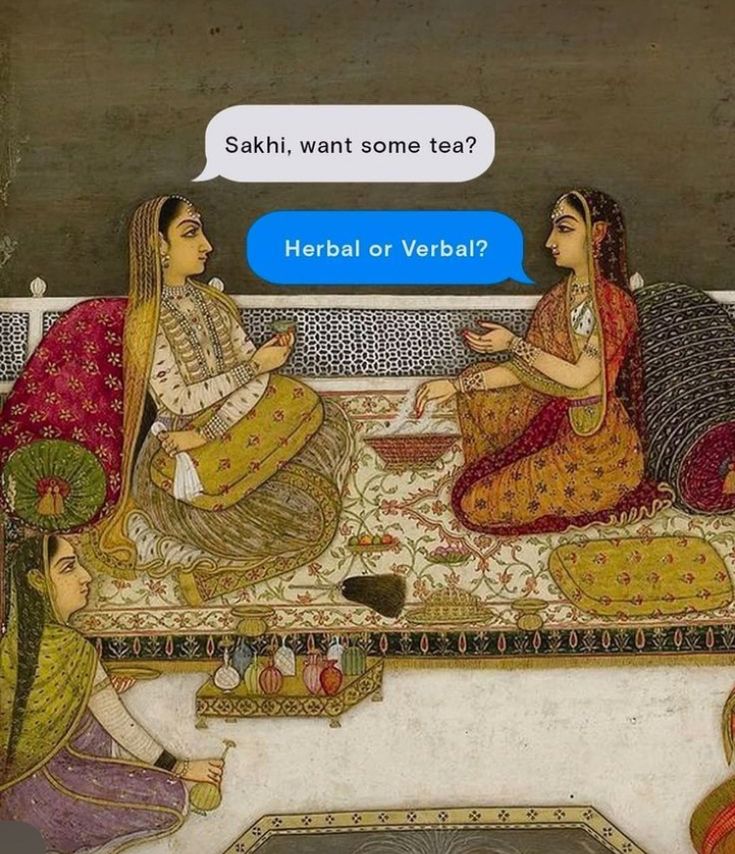
The word curry, which most of the West assumes is ancient and Indian, is a colonial invention, yesss also Chicken Tikka Masala is not Indian it is Scottish!!! Food historian Lizzie Collingham has traced how the British generalised the Tamil word for thousands of unrelated dishes, and as the great Madhur Jaffrey has spent a career pointing out, no cook in India would ever have called her own food a curry. One empire took a subcontinent of distinct regional cooking and filed it under one syllable, which is precisely what the Grammys have just done by taking a continent of music and filing it under one trophy. The word that does the crushing, whether it is curry or ethnic or Asian, has never once been a description of taste but of distance from the centre, but why do they consider themseleves as the centre??

They already admitted this was colonial, then rebuilt it
In 2020 the Grammys renamed the Best World Music Album category to Best Global Music Album, and they were unusually honest about why. Their own statement said the change marked a departure from the connotations of colonialism that the old name carried. The category had been a holding pen for everything non-Western, a single bin into which a Beninese legend like Angélique Kidjo and a South African icon like Miriam Makeba could be dropped together as though a continent and a half of music were one sound. Makeba once described that kind of labelling as a closed box that artists found very difficult to climb out of, and the Academy, to its credit, agreed and changed the name.
Six years later the same institution built the box again. They simply made it smaller and more specific, stamped a single continent across the front, wrote a language requirement into the lock, and presented it as a modern act of recognition. They knew the design was colonial, because they said so themselves in 2020, and they poured the concrete anyway. This is negligence, which is what you call it when someone knows better, has said so on the record, and does the harmful thing regardless because it is easier and it flatters the people already inside the room.

The version you have been served your whole life
Start with the price, because that is where the hierarchy hides in plain sight. The sociologist Krishnendu Ray, who chairs Food Studies at NYU, calls it the hierarchy of taste, and his argument in The Ethnic Restaurateur is brutally simple. The price a cuisine is permitted to charge tracks the social and economic standing of the people who cook it, not the skill or the labour on the plate. French and Japanese cooking are waved up into fine dining, where a tasting menu may cost whatever it likes and be received as art. A bowl of Vietnamese pho, which takes the better part of a day to build, has to fight to cross twelve dollars, because the diner has already decided in advance what that food is worth, and his decision has nothing to do with the cooking. Ray notes that Japanese food itself was once dismissed and is now canonised, and that its ascent tracks Japan’s postwar economic power far more neatly than any sudden change in the food.
Now watch what happens on the rare occasion someone from the wrong cuisine reaches the top of the room. It took until the 2023 Michelin cycle for a single Indian restaurant in the entire United States to be awarded a star, and even now there are only four. When Semma, a South Indian restaurant in New York run by the pointedly named Unapologetic Foods, finally earned one, much of the coverage reached for the language of breakthrough and revelation and elevated Indian food, as if dosa and Chettinad cooking had been sitting around for a few thousand years waiting for Western validation to become good.

Here is the condition attached to all of it, the one that should sound word for word like the Grammy rule, because it is the same rule. You are allowed all of this on one silent condition: that you stay authentic, a word that has been quietly reengineered to mean cheap, unchanging, and comfortingly legible as foreign. But if you refine it, plate it with intention, charge what the French kitchen down the road charges, and a certain kind of diner will announce that it is no longer authentic and feel personally cheated. Meanwhile a Western chef may take those same techniques, call them modern and playful and elevated, and collect the stars and the prices that the originating cooks were told they could never command. That is exactly what the Academy did to BTS. Perform your foreignness in an Asian language and you may keep a small trophy. Succeed too completely, in the dominant tongue, on the main stage, and you drop straight through the floor and are handed nothing.

The wellness rebrand is also the same theft under nicer lighting. Turmeric, tolerated as a stain and a smell when it arrived in an immigrant’s kitchen, comes back as the golden latte at four times the price with its centuries of use quietly unhooked from the people who kept it alive. Chai, a word that already means tea, is sold back to us as a chai tea latte, which literally means tea tea, now with a markup for the redundancy. Ghee is rescued from decades of being called artery-clogging and reissued as a premium wellness fat. Fermentation, the backbone of Korean and Indian and Japanese kitchens for millennia, becomes daring and cutting edge the instant the correct restaurant plates it. The technique never changed as only the hands allowed to hold it, and the sum those hands were allowed to charge.

Before anyone assumes this is only a problem for kitchens, I will implicate my own trade in a single breath. Open a grand wine list and France is sliced into villages and single vineyards, each with its own name and its own reverent paragraph, while an entire continent of serious wine is tipped onto one back shelf marked Rest of the World, or simply Other, with India and China and Japan and Lebanon crowded in together.
BTW, this was never about equality.
Here is where I stop being nice, because the language of inclusion has become a very effective anaesthetic and I would like you awake for the surgery.
A separate category is not a seat at the table because it is a side table, arranged just out of the main sightline, with a smaller trophy and a place card bearing your name, positioned so that the guests who matter never have to look directly at you. It presents as generosity and functions as removal. The moment you accept your own special prize, you have agreed to stop competing for the real one, and you have agreed to be defined by an axis you did not choose, region and language, rather than by the work itself.
Look again at that language requirement, because it is the whole game in miniature. To count as Asian pop in the Academy’s eyes you must sing in an Asian language, which means your identity is only legible when you perform it in the register they have already decided is foreign. It is the same contract the word authentic writes for a cook, and the same one the word exotic writes for a wine. Your difference is welcome right up to the moment it stops being a garnish and starts being a genuine rival, and not one inch beyond it.
Real equality is boring by comparison, which is exactly why it is so rarely offered. It does not build you a room, however judges your work in the same field as everyone else’s, by the same measure, and lets it win or lose on its merits. It does not ask what continent you are from before deciding what shelf you belong on or what price you are allowed to command. It does not need a language test to know whether the thing in front of it is good.
BTS understood the difference between being included and being contained, and they walked. I think that is the most decolonial act the awards circuit has produced in years, and I think everyone in food and wine should be paying very close attention, because we are the ones who built the side tables in the first place. We handed our own dishes a thousand regional names and gave everyone else’s a single word, curry, and a single shelf marked Other. We told a whole cuisine to stay cheap and then called that cheapness authenticity. We priced the labour of certain people low, and then we acted surprised, and a little hurt, when they finally declined the small trophy and asked, reasonably, to be let into the actual room.
The continent was never a category. The cuisine was never a single flavour. And the box, however kindly you paint it, is still a box.
 The Winedian Girl
Leave a comment