

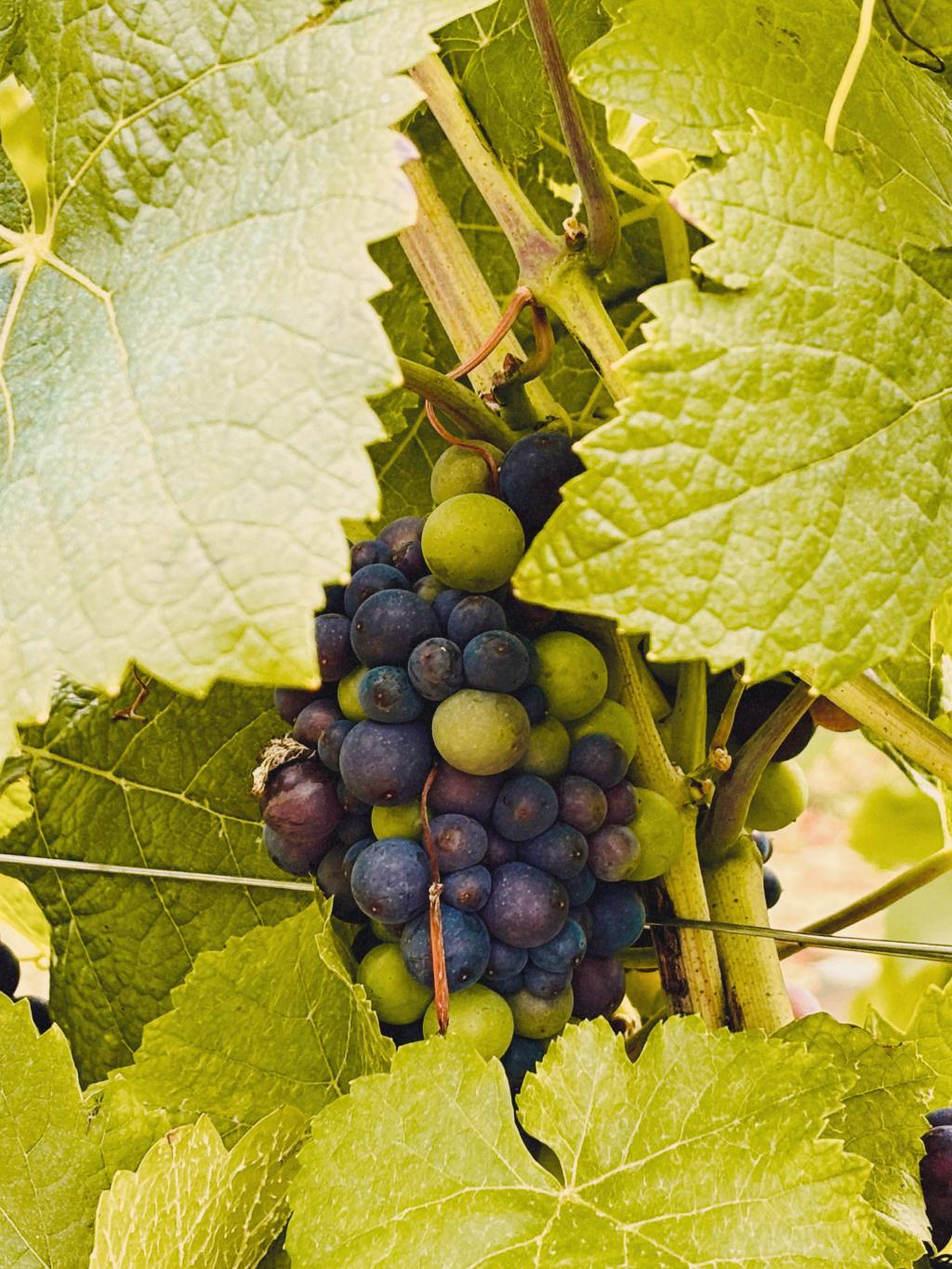
Every few weeks, usually after a tasting or a panel or a long dinner where I have said one clever thing too many, someone finds a gentle way to ask me the same question. Sometimes it arrives as a compliment and sometimes as sarcasm. What is an Indian woman doing this deep inside French wine? It is a fair question, and I have decided to stop batting it away and answer it properly, so I want to start where every French wine argument secretly starts, which is in the soil or how they like to call it, “Terroir”.

What terroir means, and how Bourgogne (Burgundy) ranks its vines
Terroir is the idea that a wine is the taste of one exact place, its stone and slope and weather and the particular way the light falls on a particular hill, and that this taste cannot be honestly reproduced anywhere else on earth. It is one of the most beautiful concepts humans have ever attached to something you can drink, and I say that as someone who did not know about this word 9 years ago.
It is also, if you watch it work for long enough, a quiet machine for sorting the world into what counts and what does not. Nowhere is this clearer than in Bourgogne (Burgundy), where a Grand Cru vine and an ordinary village vine can grow a few metres apart, separated by nothing more dramatic than an old track or a low stone wall, and still live in completely different worlds. The grape is identical, the sky is identical, and frequently the same weathered pair of hands tends both rows through the same cold spring, yet a line drawn on the hillside centuries ago decided that one vine is aristocracy and the other is merely respectable. That line is invisible, historical, and enormously expensive, and once you have felt how much it governs, you cannot help but notice when the same kind of line gets drawn around people too.
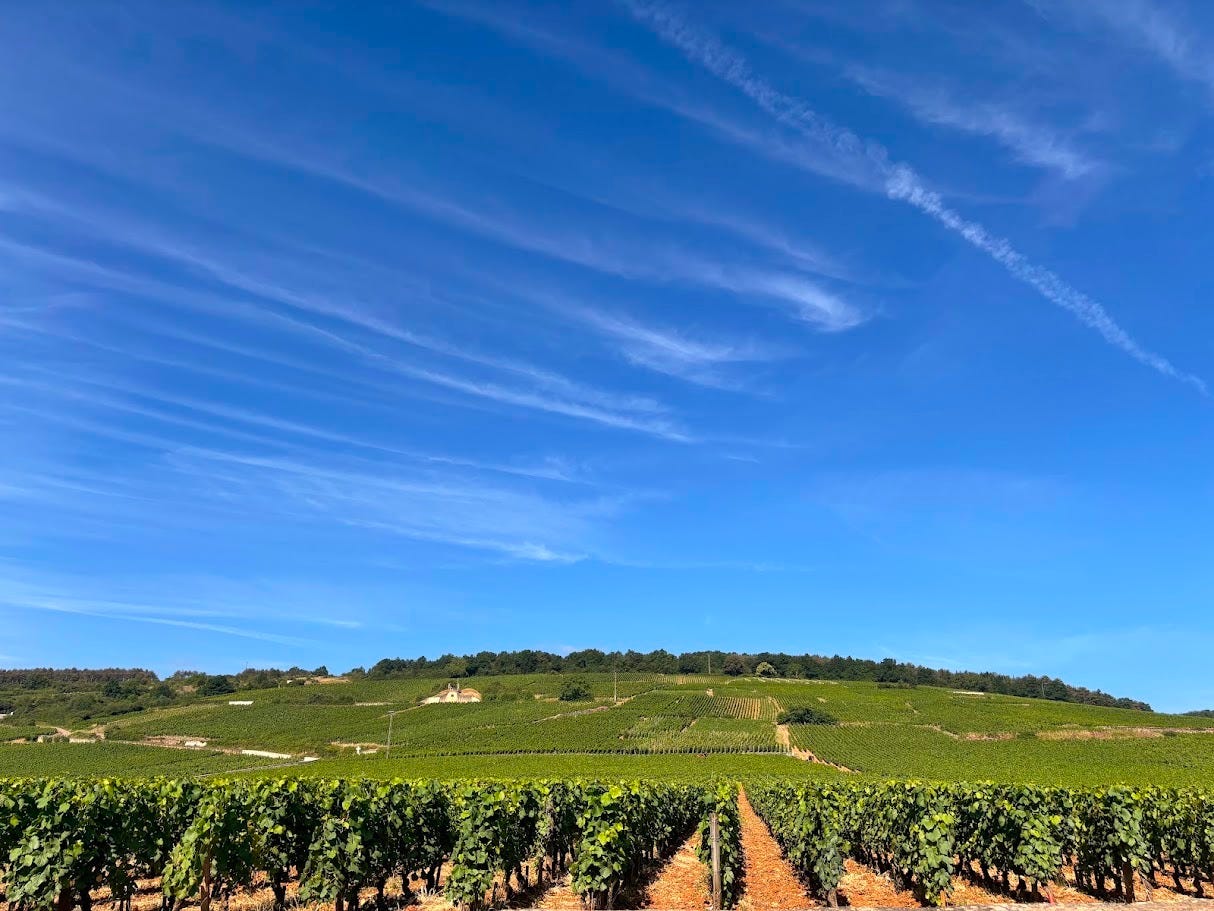
I feel it from inside the glass more often than I would like to admit as, I can stand in a cellar and speak the entire language of terroir without a single stumble, taste blind with real accuracy, hold my own on vintages and climats and the temper of a given slope, and a corner of the room will still, ever so politely, file me on the humbler side of some line I did not agree to. Competent, they seem to decide, and articulate, and somehow still not quite from here. So when the appropriation question comes, it lands on ground that has already been prepared, and I understand exactly why people reach for it, I think?
Is it cultural appropriation when the power runs the other way?
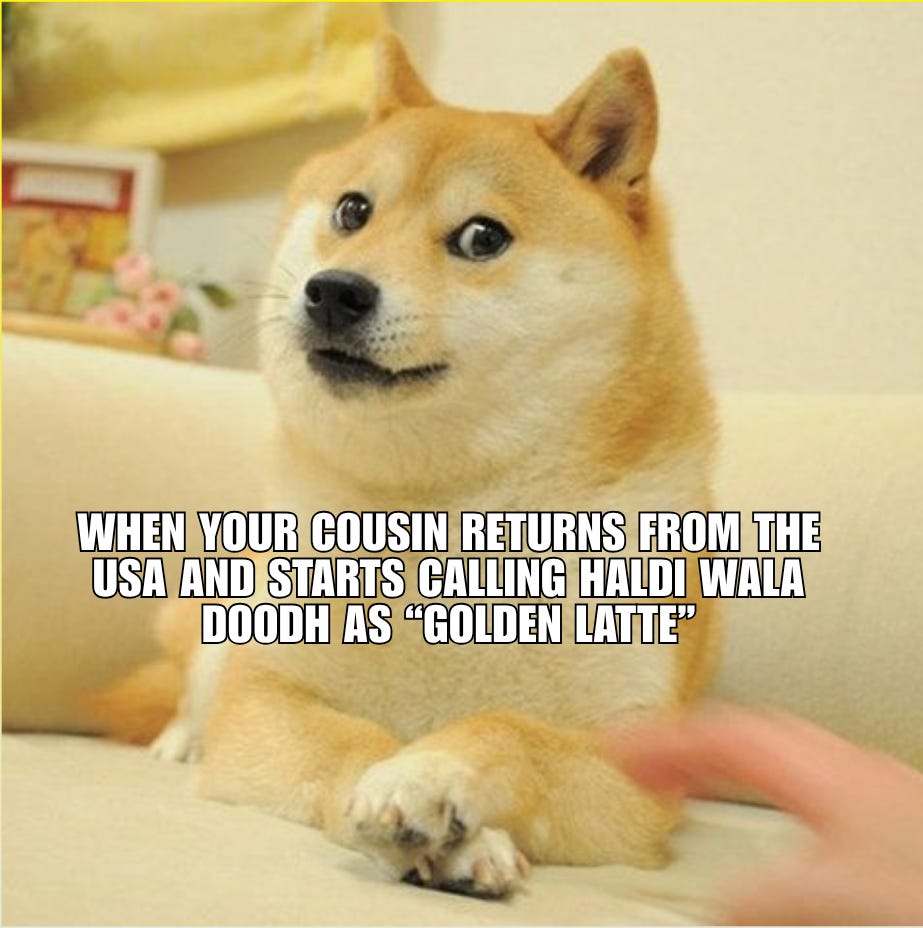
The reasoning behind the question feels almost mathematical or emotional as I am bad at math, which is what makes it so seductive. When a Western brand lifts the bindi, the kimono or a humble jar of haldi, renames it, and sells it back to us as a wellness revelation at a tasteful markup, we know precisely what we are looking at, and we are right to name it. Haldi doodh, the turmeric milk, gets rebranded as a golden latte and returned to India at many times its original price, with the South Asians who carried it for centuries quietly written out of the story. If that is appropriation, the logic runs, then surely a brown woman mastering French wine is just the same trade running in reverse, and fair is fair. The symmetry is tidy and satisfying, and it dissolves the instant you ask who is holding the power on each side of the exchange.
Appropriation, in the hands of the people who actually study it rather than argue about it online, is not fundamentally a story about imitation. It is a story about direction. It describes a dominant culture reaching down into a marginalised one, taking the beautiful surface of a thing while discarding the people who made it, and keeping the profit and the applause for itself. It travels downhill, always, from the powerful toward the powerless, and the harm lives in that descent. What happens when a person with far less power spends years, sometimes a whole life, learning the culture of those with far more is not that same act run backwards. The current is flowing the other way, and that changes what the thing is at its root.
Assimilation, mimicry, and the colonial manufacture of taste
What I am doing has older and sharper names than appropriation, and they are not especially flattering ones. It is assimilation, and for a great many of us it has always sat much closer to survival than to theft. Postcolonial theory calls it mimicry, and the detail I find genuinely astonishing is that the British engineered it deliberately. Thomas Macaulay’s notorious 1835 plan for Indian education set out, in almost these words, to manufacture a class of people who would be Indian in blood and colour but English in taste, opinions and intellect, a buffer of interpreters between the rulers and the ruled. The empire wanted us fluent in its refinement precisely so that we would serve it more usefully. What Macaulay did not anticipate, and what Homi Bhabha put his finger on a century and a half later, is that the copy never comes out clean. It emerges almost the same, but not quite, and that small persistent gap does not soothe the master, it unsettles him, because a supposedly lesser person performing his refinement flawlessly quietly reveals that the whole hierarchy was arbitrary from the very beginning.

Where the line really sits: credit v/s erasure
So if the line is real, and I believe it is, it has nothing to do with who is holding the glass. It runs cleanly between credit and erasure. Appropriation walks off with the aesthetic and leaves the people behind, unnamed and unpaid and conveniently forgotten, which is exactly what happened to every aunty whose remedy became someone else’s patented elixir. Assimilation is a marginalised woman walking into a room that was designed to keep her out, and being asked, at least twice, to justify the chair she is sitting in. One of these takes and forgets on the way out the door. The other studies, earns, waits, endures the second and third rounds of proving herself, and carries the memory of exactly where she came from into every room she is finally allowed to enter.
Every noble European grape is an immigrant
Which brings me back down into the soil, because terroir has one more thing to teach us and it is not the lesson it thinks it is teaching. Terroir insists that a grape belongs only to the place where it was born, that authenticity is a matter of origin and nothing else. And yet every single one of those noble European grapes is an immigrant several times over. The genetics are now clear on this: the wine grape was domesticated far to the east, in Western Asia and the Caucasus, and then carried slowly westward across thousands of years by people who were themselves in motion, following trade and famine and hope until the vine finally reached the hills of France and learned to taste of them. Terroir, understood honestly, is not what a grape is born into but what happens after the journey. It is the accumulated record of arrival, adaptation and belonging, earned rather than inherited.
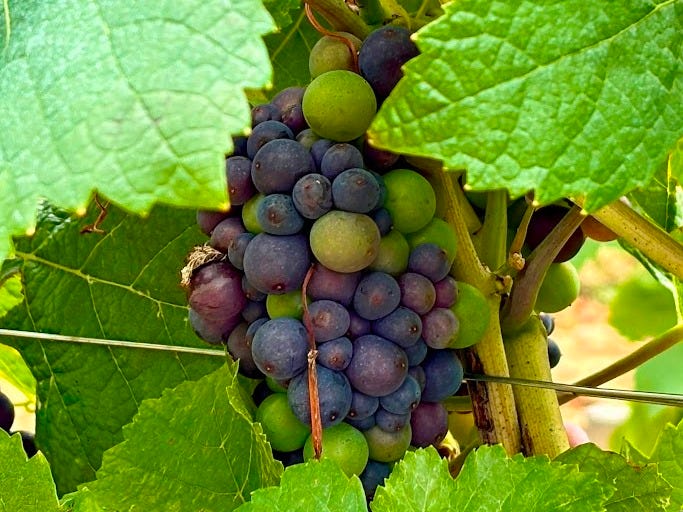
So no, I am not appropriating French wine, and I have stopped apologising for the fact that I know it better than most people who assume it is theirs by birthright. I am the travelling grape. I was carried here by my own long chain of trade and famine and hope, I have put down real roots in Bourgogne (Burgundy), and I am learning to taste of this new place without forgetting for one second the first one. I have taken no one’s name and erased no one’s story on the way. If there is a line to be drawn through all of this, it is drawn in power and in erasure, and by that measure my hands are clean. That is where I think the line sits.
 The Winedian Girl
Leave a comment